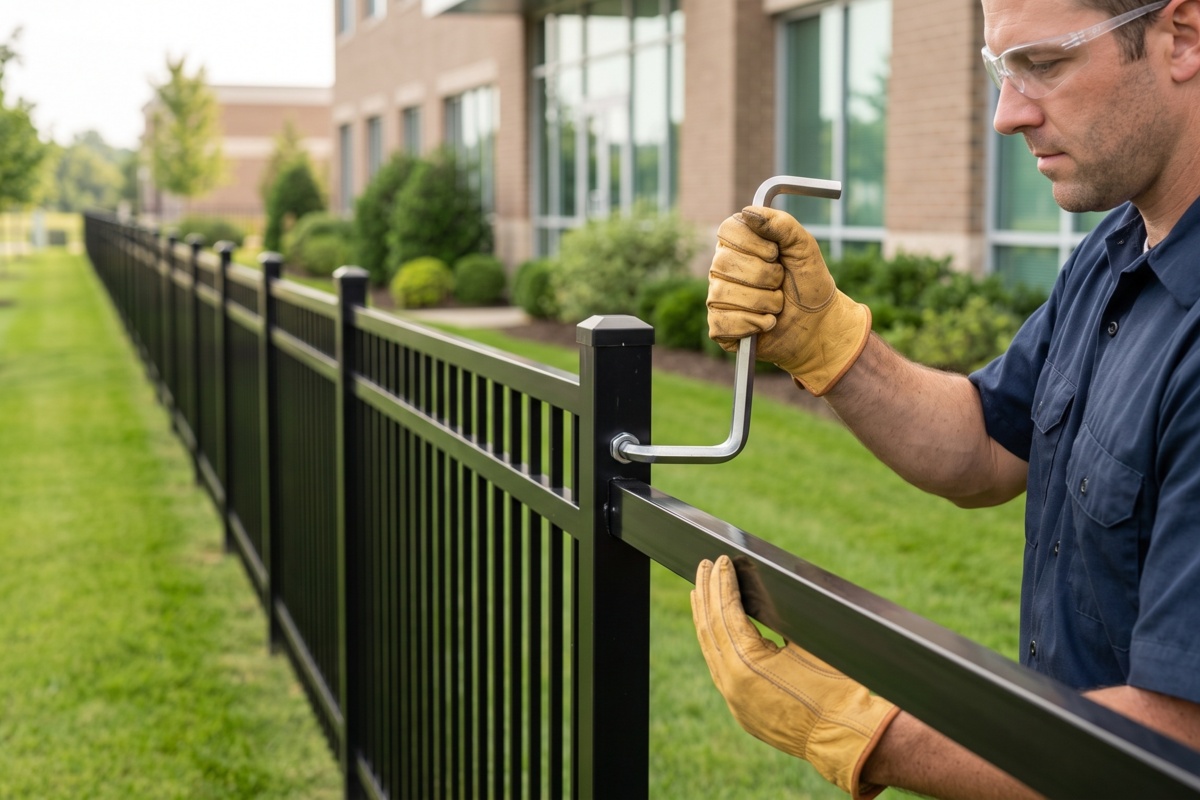
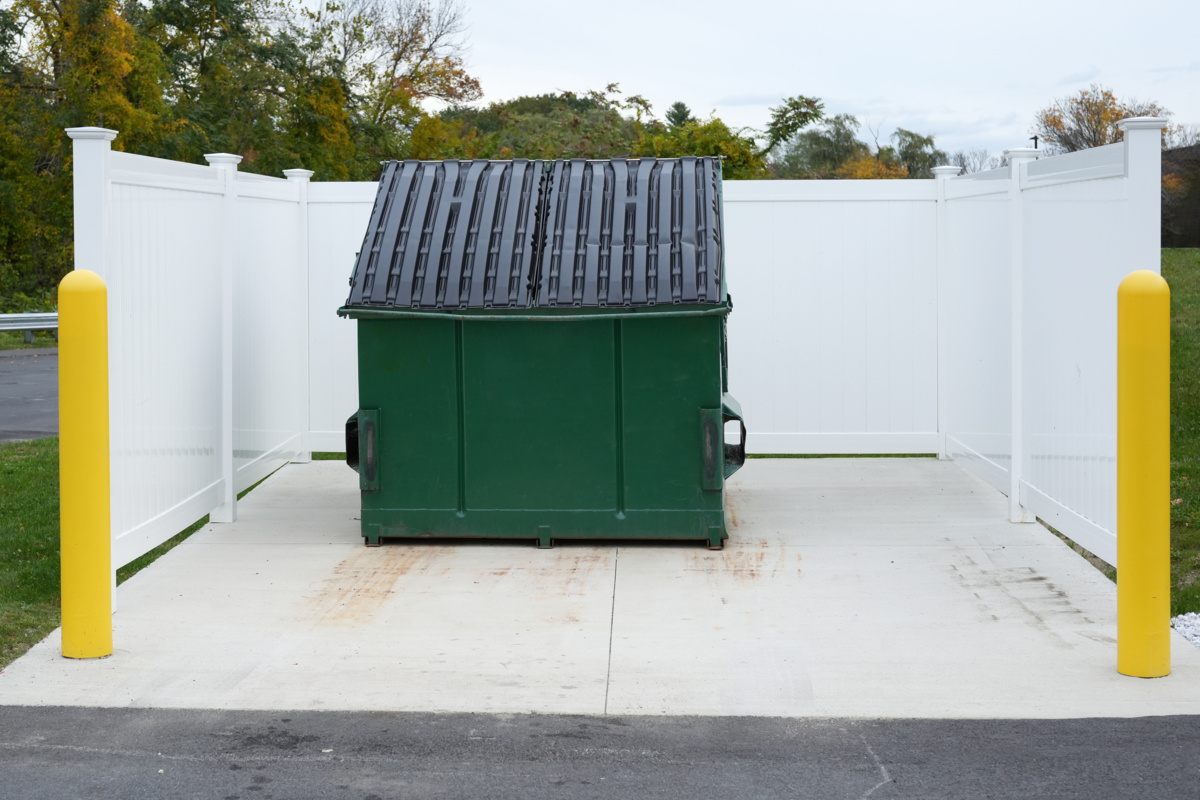
Effective dumpster enclosure fencing screens commercial waste containers while preserving enough clearance for employees, service crews, and collection trucks. The right design depends on local rules, dumpster dimensions, gate movement, site drainage, traffic exposure, and the appearance of the surrounding property.
Our commercial site assessment accounts for those details before installation begins. We measure the enclosure area, discuss access with the property manager, review material options, and plan posts and gates for Minnesota ground conditions and regular commercial use.
Local Rules for Dumpster Enclosure Fencing
There is no single Twin Cities standard here, which is the first thing worth knowing before you price anything. South St. Paul rewrote its trash enclosure rules in 2021 under Ordinance No. 1375, amending three zoning districts at once. Some sections deal with screening from an eye-level view, others with materials or how far the enclosure has to sit from your main building.
The ordinance also includes trash enclosures among projects that require an application to the South St. Paul building official. Requirements should be confirmed with the city where the property is located because Minneapolis, St. Paul, Bloomington, Plymouth, and surrounding suburbs maintain their own zoning and permit rules.
A fence permit is also different from permission to occupy public space. If construction equipment, materials, or vehicles will affect a Minneapolis street, sidewalk, alley, or other public right-of-way, the project may require one of the city’s street-use permits. Site planning should determine whether this applies before installation is scheduled. Picking a material does not settle the question either. Steel fence permitting looks simple until zoning district, height, and location get involved.
Best Materials for Commercial Dumpster Enclosures
A commercial dumpster enclosure must handle more contact and gate movement than a typical residential privacy fence. The best material depends on the required screening level, building appearance, available maintenance, exposure to vehicles, and local design standards.
Chain Link with Privacy Slats
Chain link can provide an economical frame for a high-use waste area. Privacy slats may improve screening while the steel framework supports frequent gate operation.
Because slats increase the surface area exposed to wind, post spacing, gate design, and wind exposure need to be considered together. Our commercial chain-link fence installation uses commercial-grade components and post systems selected for the property’s security and traffic requirements.
Cedar or Pressure-Treated Wood
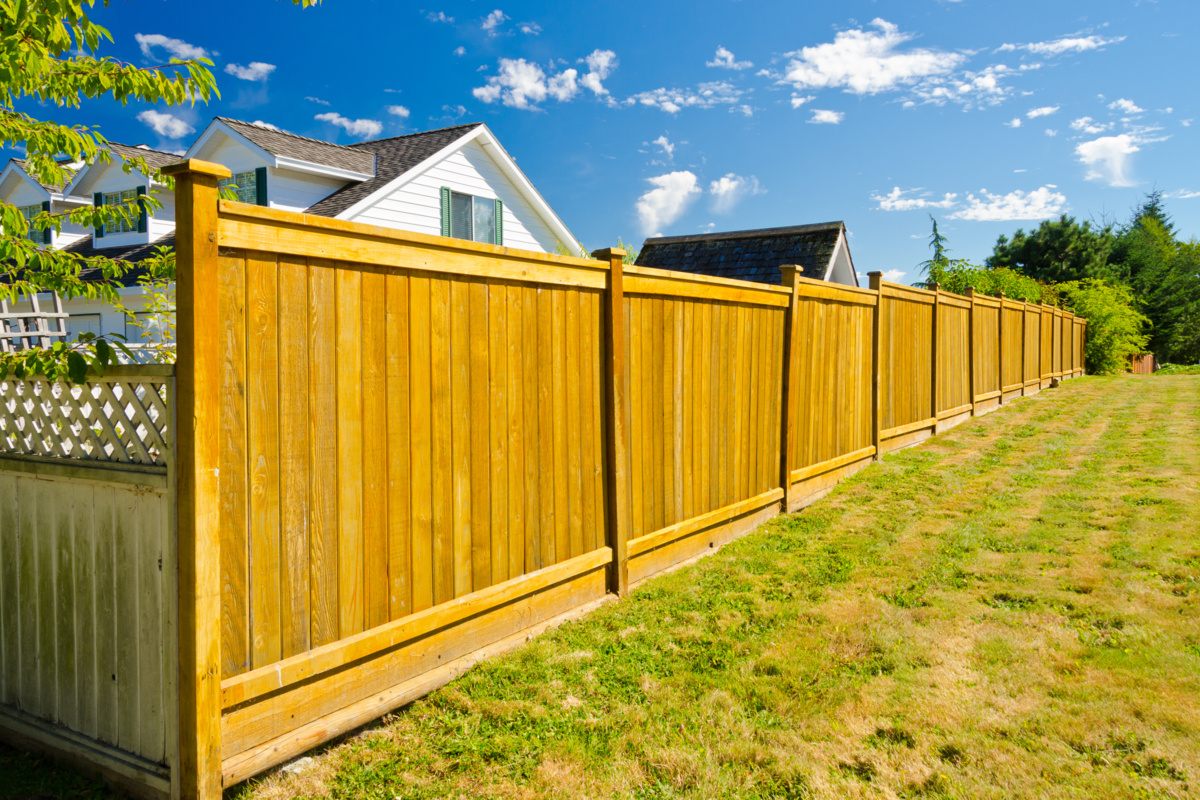
Wood can coordinate well with restaurants, retail buildings, offices, and multifamily properties where appearance carries more weight. Boards can create solid visual screening and may be stained to complement the building.
Wood struggles where it stays wet. Boards sitting close to the pavement that hold snow and meltwater are the first thing to go, and a wide gate built entirely from wood will usually sag within a few seasons. We frame those gates in steel and hang the boards off that instead.
Vinyl or Composite Panels
Vinyl and composite systems provide solid screening with less routine finishing than wood. Their washable surfaces may suit properties where grease, spills, or regular cleanup are concerns.
Our vinyl fence installation systems use steel-reinforced posts and aluminum-framed gates, which cover most of what a commercial enclosure puts them through. Worth checking the panel against your city’s screening rules before you order, since not every product meets a commercial opacity standard.
Reinforced Gate Systems
Gates are often the first part of an enclosure to show problems because they carry their own weight and move during every collection cycle. Wide openings create additional leverage on hinges and posts, particularly when snow, pavement movement, or accidental contact affects alignment.
Commercial gates may need reinforced frames, deeper gate-post footings, heavy-duty hinges, positive latching, or hold-open hardware. The exact configuration should match the opening width and the waste hauler’s operating needs rather than follow a standard residential gate detail.
Planning for Winter and Collection-Truck Traffic
Minnesota freeze-thaw movement shifts posts and throws gate clearance out. On our commercial fencing projects, standard posts go 4.5 to 5.5 feet deep, and gate posts get their own excavated footings with concrete. The final method depends on the gate system and site conditions.
The enclosure layout should also account for the equipment moving around it. A practical assessment considers:
- The dumpster’s current size and possible future replacement
- Gate swing clearance during snow and ice conditions
- The collection truck’s approach and turning path
- Bollard placement near vulnerable posts and panels
- Pavement slope, drainage, and snow-storage areas
- Safe access for employees carrying waste or recycling
Bollards may help protect the fence from direct vehicle or dumpster contact, but they must not restrict collection access. Concrete pads and pavement specifications should be coordinated with the waste hauler, property owner, and qualified concrete contractor rather than treated as a standard part of every fence installation.
Wind exposure deserves similar attention. Enclosures near open parking lots or exposed corners experience different loads than those shielded by a building. Material selection and post planning should account for the same weather considerations that affect commercial fencing in storm-prone Minnesota locations.
Keeping Commercial Replacement Work Organized
A damaged enclosure can interrupt waste collection, expose containers to public view, and create added work for property staff. Fast installation is useful, but the schedule still depends on measurements, materials, municipal approvals, utility marking, access, and coordination with the waste hauler.
We walk the site and lay the enclosure out before we give you a date. If you are comparing our proposal against others, here is what separates a reliable commercial fence contractor from one that will hand you a change order: a defined scope, real material specs, permit coordination, warranty terms, and a schedule that works around your operations.
Secure the Waste Area Without Complicating Collection
A dumpster enclosure should improve the property without becoming an obstacle every time a collection truck arrives. Screening, gate width, post placement, pavement conditions, and city requirements need to work together from the beginning.
Contact Next Day Fences to schedule a commercial site assessment. Bring your dumpster dimensions, collection schedule, site plan, and any city notices so we can identify access concerns and prepare a practical plan for durable dumpster enclosure fencing.