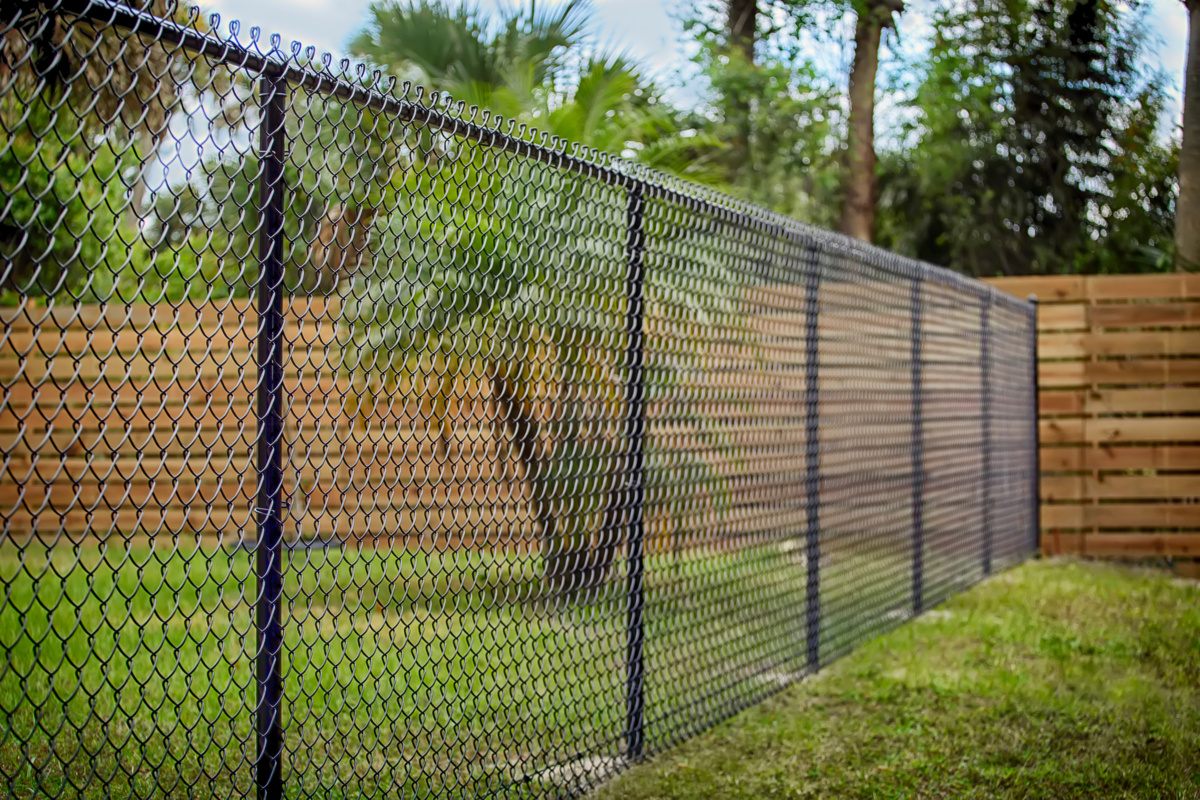
For many Minneapolis homeowners, chain link is the cheapest fence among common permanent residential options. Its open mesh, standardized steel framework, and efficient installation generally require less material and labor than solid cedar, vinyl, or ornamental steel systems.
Lower starting cost does not mean every chain-link project receives the same quote. Fence height, coating, mesh specifications, gates, removal work, grade changes, access, privacy additions, and city requirements can all affect the final investment.
Why Is Chain Link Usually the Cheapest Fence?
Chain link creates a secure enclosure without using solid boards or manufactured privacy panels across the entire fence line. Galvanized wire fabric stretches between steel posts and framework, allowing the system to cover substantial footage with fewer finish materials than most privacy fences.
Standardized components can also make installation more efficient on a straightforward residential lot. Chain link earns its place when the job is defining a boundary, containing a dog, or fencing a backyard without walling off the view. That same open-mesh logic is why it turns up around play areas, though schools and parks usually move to ornamental steel once appearance matters as much as durability. Homeowners who need complete screening may prefer another material or add privacy slats, which increases the project cost.
What Makes a Chain-Link Fence More Affordable?
Several parts of the system contribute to its lower typical starting price. The advantage comes from the combination of material use, repeatable components, and limited finishing work rather than lower cost in one category alone.
- Less Finish Material: Open wire mesh uses less solid material than a cedar or vinyl privacy panel. Chain link also avoids the board-by-board assembly needed for many wood fences, which can reduce both material and labor requirements.
- Standardized Framework: Line posts, terminal posts, rails, fittings, and mesh create a repeatable installation system. Once the layout and post locations are established, the fabric can be tensioned across longer runs without building each section as an individual solid panel.
- No Routine Staining Requirement: Galvanized and vinyl-coated chain-link systems do not require the recurring staining associated with many wood fences. Periodic inspections are still worthwhile because damaged coatings, loose fittings, sagging mesh, and misaligned gates can develop over time, particularly under Minnesota weather conditions.
These advantages are most noticeable on a simple perimeter with limited gates and manageable terrain. Decorative coatings, privacy products, custom hardware, and difficult installation conditions can narrow the price difference.
How Does Chain Link Compare With Other Fence Materials?
Price is only one part of the material decision. Chain link often leads on upfront affordability, but cedar, vinyl, and ornamental steel offer different combinations of privacy, appearance, and maintenance.
| Material | Typical Upfront Cost | Privacy | Visual Character | Maintenance Consideration |
| Chain link | Usually lowest | Open unless screening is added | Practical and unobtrusive | Inspect mesh, fittings, coatings, and gates |
| Cedar or wood | Higher | Strong with solid boards | Natural and customizable | May require cleaning, staining, or board repair |
| Vinyl | Higher | Strong with solid panels | Clean and uniform | Limited routine finishing, but damaged panels need compatible replacements |
| Ornamental steel | Typically premium | Open | Formal and decorative | Inspect coatings, hardware, and corrosion-prone areas |
Cheapest is not automatically right for every stretch of one property. Chain link along a long back boundary, cedar where you want privacy off the patio, and ornamental steel out front where the fence is doing decorative work. Worth matching the fence material to the house before price makes the call for you.
What Can Increase the Final Chain-Link Fence Cost?
The basic mesh-and-framework system is economical, but specifications and property conditions determine how much labor and material the installation requires. A quote should account for the complete scope rather than relying on a generic per-foot assumption. Cost can increase with:
- Greater fence height: Taller systems require more material and may need heavier framework.
- Upgraded mesh or coating: Heavier fabric and black or colored vinyl coatings add material cost.
- Privacy slats or screening: Added products reduce visibility but move the system beyond a basic open enclosure.
- Larger or additional gates: Wide, double, sliding, and specialty gates require more hardware and structural support.
- Existing fence removal: Demolition and disposal add labor before the new installation begins.
- Slopes and restricted access: Grade changes, tight side yards, and limited equipment access can slow installation.
- Difficult ground conditions: Drainage problems, soil conditions, and obstacles can complicate post placement.
- Custom transitions: Connections to buildings, retaining walls, or another fence material require added planning.
A site-specific layout provides a more useful cost picture than selecting a fence from a starting price alone. It can also identify where a basic specification works and where targeted upgrades are worth the expense.
Minneapolis and St. Paul Rules That Can Affect Your Fence Project
Local review can affect fence height, location, design, and project timing. Minneapolis and St. Paul do not follow identical processes, so the project address should determine which requirements apply.
Minneapolis Planning Requirements
Minneapolis doesn’t require a building permit for typical residential fences under seven feet, but the project must still follow zoning rules for location, height, and design. A permit exemption does not authorize every fence configuration, particularly where front yards, corner lots, visibility, or unusual heights come into play.
St. Paul Height and Corner-Lot Rules
St. Paul works the opposite way. Every fence needs a permit and plan review there, whatever the height or material, and the fee runs $45 for the first 200 lineal feet plus $15 for each additional 100. Front yards cap at four feet, side and rear at seven. On a corner lot, anything inside the triangular area ten feet from the intersection stays under two feet unless the fence is more than 80 percent open. The city names the chain link as its example of openness.
Open construction may help chain link fit certain visibility conditions, but it does not override property-line, height, pool, or review requirements. We handle the permit work and city coordination, then build the approved layout into your project schedule.
The Cost of DIY vs. Professional Chain-Link Installation
DIY installation may reduce direct labor expense when a homeowner has accurate boundary information, utility marking, suitable tools, enough help, and a simple level layout. The work still requires consistent post spacing and alignment, secure terminal bracing, proper fabric tension, and gates that remain square and operate smoothly.
Professional fence installation may offer better overall value for long runs, multiple gates, slopes, demolition, difficult soil, restricted access, or projects requiring municipal coordination. Errors involving posts, mesh tension, property lines, or gate setup can consume part of the apparent savings if sections must be corrected or rebuilt.
How We Keep Chain-Link Costs Under Control
At Next Day Fences, we plan the fence around the enclosure you need instead of adding features that don’t serve the property. Our team can help determine where standard galvanized chain link is sufficient and where a coating, heavier material, privacy feature, or upgraded gate provides a meaningful benefit.
Our process can help control the project scope through:
- Purpose-based specifications: Mesh, framework, height, and gates are matched to pets, boundaries, access, or other practical goals.
- Accurate layout planning: Measurements, grade, existing structures, removal work, and access conditions are considered before installation.
- Permit management: We handle required applications and coordinate with the applicable city.
- Organized preparation: Utility marking, material delivery, and site preparation are coordinated around the approved layout.
- Defined scheduling: Once approvals are complete, the project moves into scheduling with a clear installation plan and timeline.
- Minnesota-ready construction: We use commercial-grade chain-link material and set steel posts for freeze-thaw, applying the same structural approach we use on exposed, storm-prone sites.
We complete most residential chain-link projects in one to two days, though timing depends on scope and site conditions. We also offer an instant quote and warranties on the chain link fencing systems we install.
Get a Free Quote on Chain Link Fence Installation Today
Chain link often has the lowest starting cost, but the best value depends on more than the material. Your specs and your site decide what actually makes sense for the yard.
At Next Day Fences, we’ll show you where standard galvanized chain link is enough and where a coating, heavier gauge, or better gate earns its cost. We pull the permits, clear city review, and set the schedule once your plan is approved. Contact Next Day Fences today for a free estimate and find out whether chain link is really your cheapest option once the full job is counted.