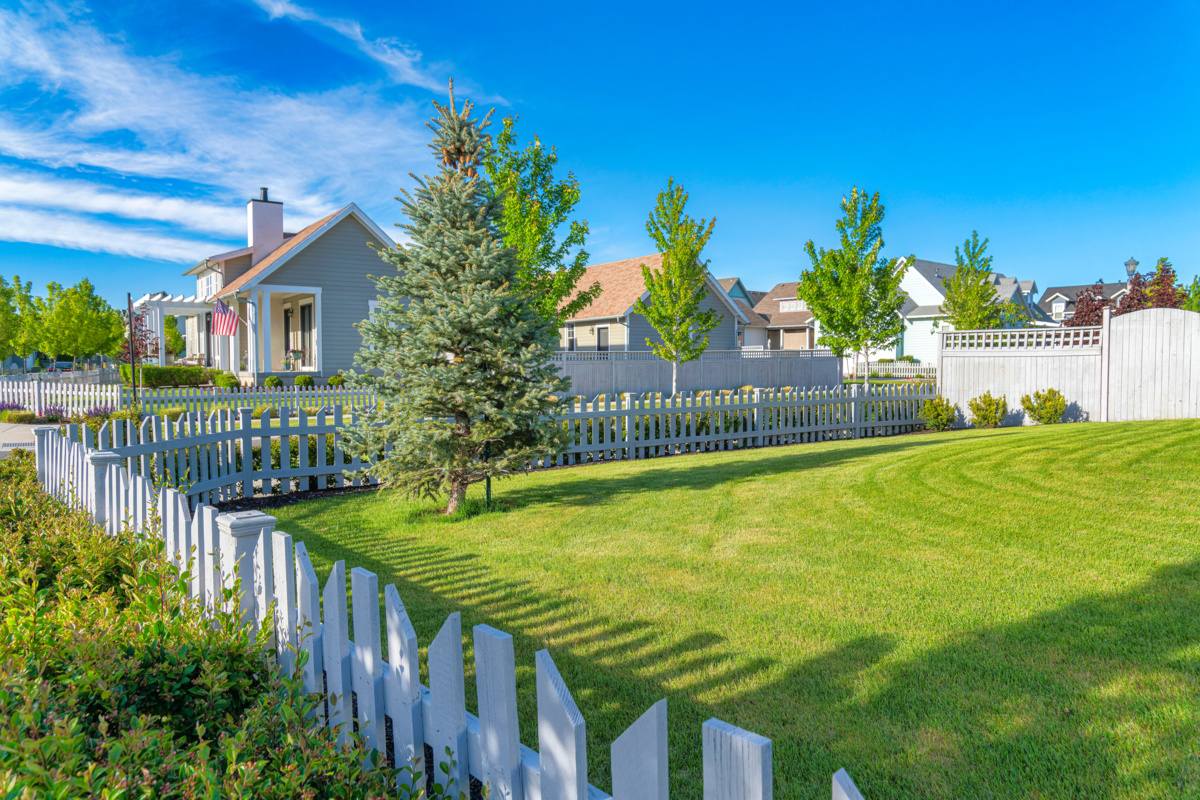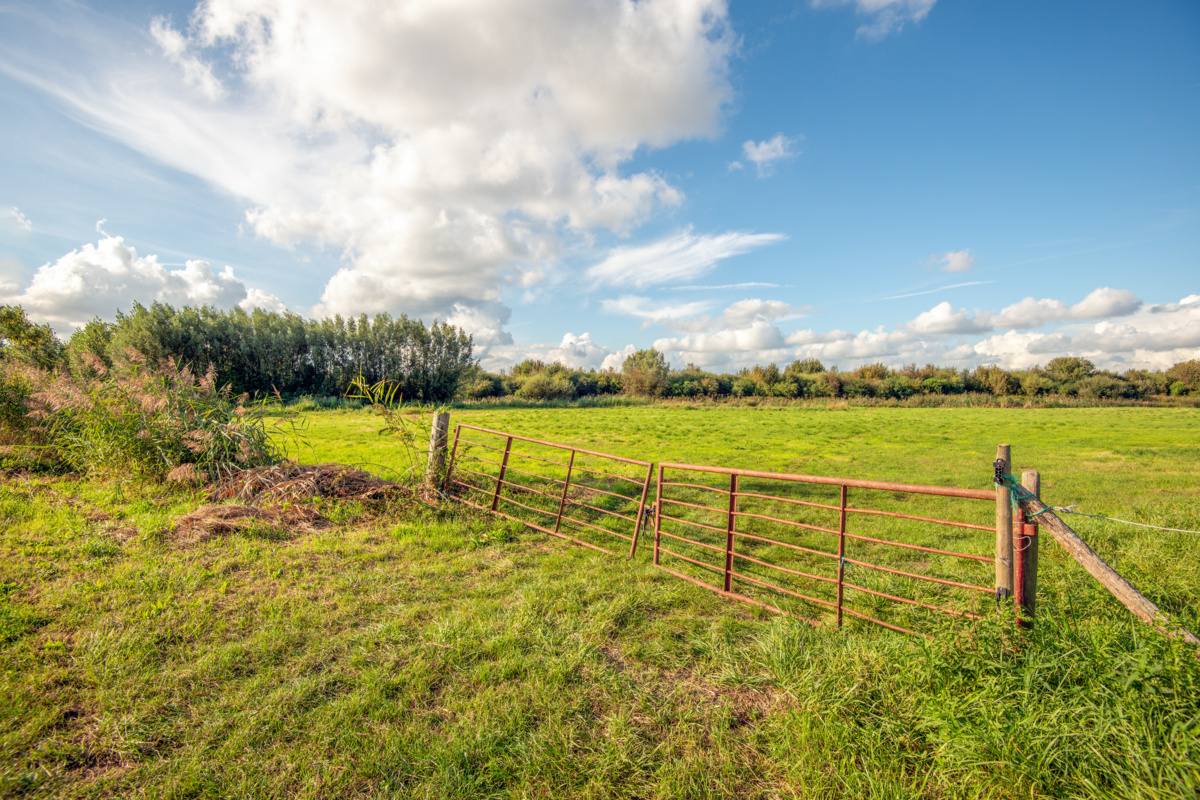
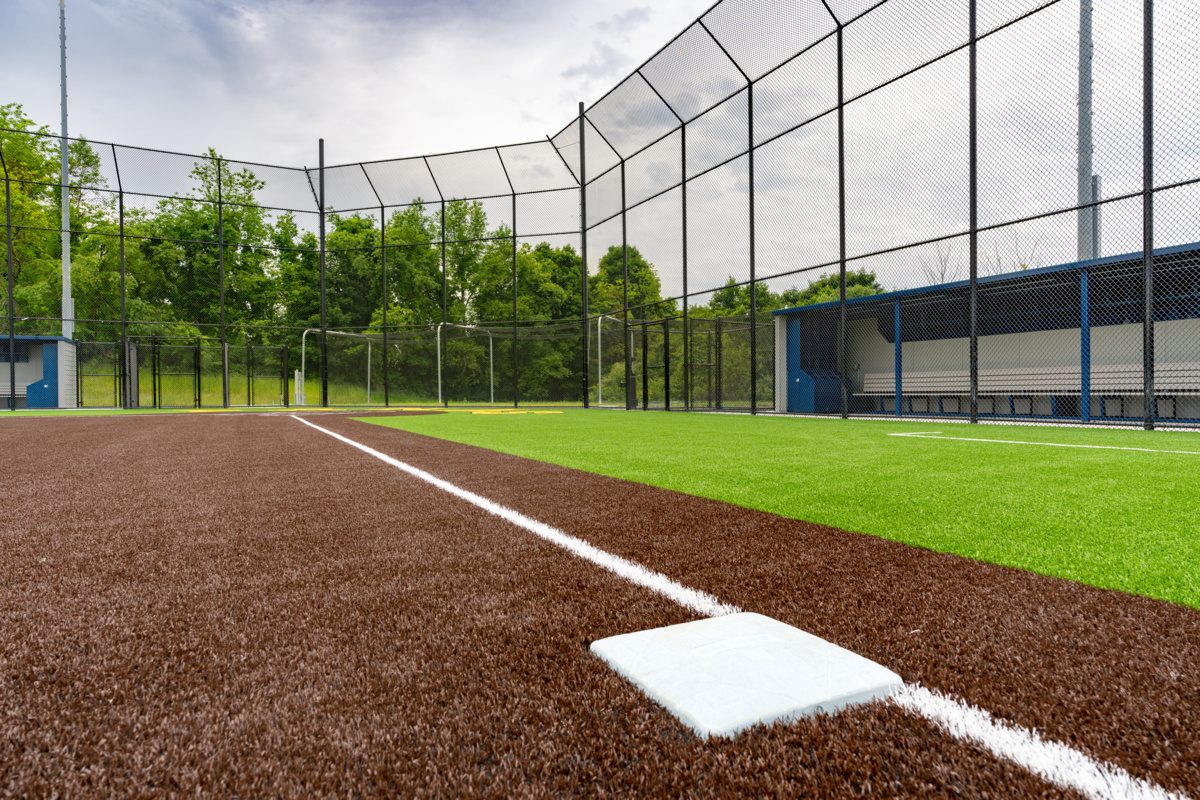
A school or playground fence must do more than mark the edge of a property. It may need to guide children and visitors toward designated entrances, preserve clear sightlines, separate play areas from nearby hazards, and support daily supervision.
Ornamental steel fencing can meet many of those needs without creating the closed-off appearance of a solid barrier. The right result still depends on the perimeter layout, gate locations, openings, hardware, grade, installation method, and requirements that apply to the specific Minnesota site.
What Types of Fencing Are Common Around Schools and Playgrounds?
Schools, childcare centers, parks, and playgrounds often use more than one fence material across the same property. The appropriate system depends on the area being enclosed, the level of visibility needed, expected traffic, maintenance demands, and available budget.
Chain-Link Fencing
Chain-link fencing is commonly used for large perimeters, athletic fields, service areas, and projects where visibility and cost control are important. Mesh size, coating, fence height, bottom clearance, gate design, and the treatment of exposed wire ends all affect whether a strong, long-lasting chain-link installation suits a children’s play area.
Ornamental Steel and Aluminum
Steel picket fencing provides a more formal appearance while maintaining open sightlines. It can work well at main entrances, playground boundaries, courtyards, and other public-facing areas where a school wants a clear perimeter definition with a polished, secure look. Aluminum offers a similar look with less weight and natural corrosion resistance, though it lacks steel’s strength, height, coating, and site prep. Driving the cost of the steel fence more than the metal itself.
Vinyl, Wood, and Mixed-Material Systems
Solid vinyl or wood panels may be useful where a school needs screening from service areas, neighboring properties, or mechanical equipment. Because opaque fencing limits visibility, it may be less appropriate around areas that rely on continuous supervision. Mixed systems can combine ornamental steel at entrances with chain-link around athletic areas and privacy panels near utility zones.
No single material needs to cover every part of the campus. A coordinated perimeter fencing plan can assign each system to the location where its characteristics are most useful.
Why Ornamental Steel Fencing Works Well for Minnesota Schools
Ornamental steel fencing can be a strong Minnesota option when the project needs visibility, durable perimeter definition, and a professional appearance. Its performance depends on the selected steel system, coating, gate hardware, foundations, drainage, and installation quality.
Clear Sightlines Without an Open Perimeter
Picket-style panels allow staff to observe activity through the fence while giving children and visitors a clear visual boundary. Open sightlines can also help caregivers identify entrances and allow staff to notice activity approaching the playground from outside the enclosed area.
Strength for High-Use Access Points
School and playground gates may open hundreds of times during arrival, recess, dismissal, maintenance, and community events. Posts, hinges, latches, and foundations must be selected for that repeated use. Minnesota freeze-thaw movement can also affect gate alignment when posts are too shallow or the installation method does not match the soil and site conditions.
A Finish Suited to Public-Facing Sites
Commercial ornamental steel fencing can complement brick schools, modern additions, parks, and civic buildings without resembling an industrial enclosure. Protective finishes still require periodic inspection, particularly where snowbanks, road spray, moisture, or deicing products may contact the fence or hardware.
Steel is most effective where its visibility, strength, appearance, and gate compatibility match the site’s operating needs.
What Should a School Security Fence Be Designed to Accomplish?
School security fencing should start with clearly defined objectives, not a material choice. A perimeter may support safety and access management, but it should be coordinated with supervision practices, emergency planning, circulation, and the surrounding property.
A well-planned fence can help:
- Define where the supervised school or play area begins and ends
- Direct routine entry toward visible, controlled access points
- Separate children from traffic, parking, loading areas, water, or service zones
- Preserve useful sightlines for staff and caregivers
- Maintain emergency, maintenance, and accessible routes
- Reduce avoidable gaps, projections, or hardware hazards
Each objective should translate into site-specific specifications. A fence intended mainly to guide pedestrian movement may need a different layout from one separating a playground from a busy road or vehicle area.
Which Design and Safety Details Deserve the Most Attention?
The safety of playground fencing depends on the complete system, not merely the panel material. Openings, pickets, gates, hardware, grade changes, circulation routes, and nearby hazards must be evaluated together.
Picket Spacing, Openings, and Projections
The current CPSC playground handbook provides federal safety guidance for public playground planning and equipment. Fence designs should be reviewed for openings that could create entrapment concerns, projections or sharp components, climbable features, and excessive gaps beneath panels caused by uneven grades. The handbook is guidance rather than a substitute for local review or project specifications.
Project documents may also reference ASTM F2049, the Standard Safety Performance Specification for fences and barriers around public, commercial, and multifamily outdoor play areas. ASTM withdrew F2049-11(2017) in 2026, so design teams should confirm which current standard, owner requirement, or adopted rule applies rather than citing a withdrawn one.
Gates, Latches, and Circulation
Gate design should account for width, direction of swing, queuing, daily locking procedures, accessible travel, emergency access, snow accumulation, and maintenance equipment. Entrances should not discharge children directly toward traffic or create congestion where families gather during arrival and dismissal.
Vehicle and Service-Area Separation
An ornamental steel pedestrian fence should not be assumed to function as a vehicle barrier. Where vehicle intrusion is a credible design concern, the project team may need setbacks, bollards, engineered barriers, curbs, or other traffic-control measures designed specifically for impact conditions.
Playground guidance, school operations, accessibility, emergency response, and perimeter security should be reviewed as connected parts of the same plan.
What Minneapolis Rules Should Project Teams Check?
Minneapolis publishes general fence and zoning guidance, but an institutional project may involve more review than a typical residential fence. The City notes that fences must comply with zoning requirements even when a building permit isn’t required, and the steel fence permit path in Minnesota still varies from city to city.
Before finalizing the design, project teams should confirm:
- The property’s zoning district and permitted land use
- Applicable fence location, height, and visibility requirements
- Property lines, easements, utilities, and public right-of-way limits
- Accessibility, egress, fire access, and emergency gate coordination
- School district, childcare licensing, insurer, grant, or owner standards
- Whether a site-plan review, a permit, a variance, or another approval is required
Review city guidance with the project’s architect, engineer, or owner representative, and know the right questions to ask a fence contractor before you sign. A rule that applies to a residential yard should not automatically be treated as the complete requirement for a school, playground, park, or childcare property.
Why Work With Next Day Fences on an Institutional Perimeter?
At Next Day Fences, we install ornamental steel systems and commercial perimeter fencing for schools, playgrounds, childcare centers, parks, and other institutional properties. We evaluate the full perimeter so the fence supports daily movement, maintenance access, supervision, and long-term site use.
What we bring to an institutional perimeter:
- Mixed-material coordination: We combine ornamental steel with chain-link, privacy panels, and gates where one system can’t cover the whole site.
- Minnesota gate durability: We size posts, drainage, and hardware for freeze-thaw movement so high-use gates stay aligned through the seasons.
- Access and emergency routing: We map pedestrian entrances, service access, maintenance equipment, and egress before installation begins.
- Early conflict-spotting: Bringing us in early surfaces clashes among security, circulation, maintenance, and appearance before they reach the ground.
From there, we build a project-specific plan around the property’s access, grade, and operating requirements.
What Does Your School Perimeter Need to Manage Each Day?
The right perimeter follows how the site actually runs each day, arrival and dismissal, deliveries, supervision, snow operations, and after-hours use. Tell us where those pressures fall, and we’ll recommend where ornamental steel fits and where another material or barrier serves better. Contact Next Day Fences for a project-specific proposal for your school, childcare center, park, or playground, built around your access, circulation, and installation needs.