
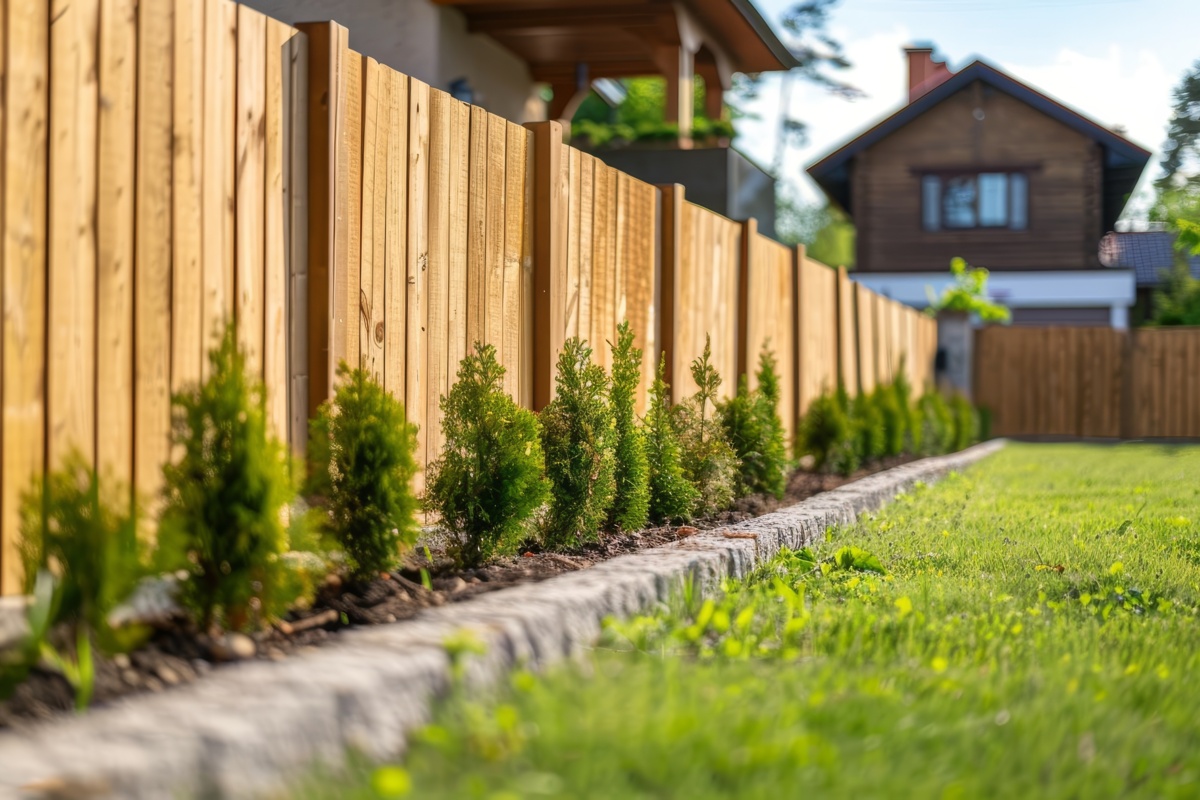
A fence passes code when its height, location, and design match what your city actually requires, which is rarely what the neighbors built. Boundaries, easements, sight lines at corners, and what is buried under the post holes all get settled before anyone starts digging.
We settle those questions during planning, with the city, an HOA, a surveyor, or a private locator as needed, rather than on install day.
Is Your Fence Up to Code in Minneapolis?
The City of Minneapolis fence guidance states that a building permit is not required to build a fence, but the project must still meet zoning requirements for location, height, and design. Two exceptions sit behind that. The city requires a building permit for fences over seven feet, and for pool barrier fences at any height.
Zoning sets the height, and in Minneapolis it turns on how solid the fence is. A fence counts as open or decorative when the entire run within that yard is at most 60 percent solid, and vinyl-coated chain link qualifies.
| Where the fence sits | Open or decorative | Solid |
| Front yard | 4 ft | Not allowed |
| Corner side yard | 4 ft | 4 ft, or 6 ft only as far forward as needed to enclose an entrance facing the corner |
| Interior side yard | 6 ft | 4 ft, or 6 ft past the neighbor’s rear wall, or 6 ft if set 5 ft or more from their house |
| Rear yard | 6 ft | 6 ft, or 4 ft where the rear lot line abuts an interior side lot line |
No fence exceeds eight feet in any location. Because the limit depends on opacity and on where the neighbor’s house sits, height and privacy requirements are worth confirming for your specific address. Current figures are in the city’s fence requirements handout.
Code Checks Before Fence Installation
Minneapolis residential fence requirements extend beyond choosing a material and measuring the overall fence height. The proposed location and conditions around the property both affect what may be installed, which is the part that catches people out in cities where fence permits are not required.
Height, Location, and Visibility
Allowable fence height may change according to where the fence will sit on the property. Do not assume one set of dimensions covers a backyard privacy fence, a fence beside a home, and a fence extending toward a public sidewalk.
Corner lots require additional attention because a tall or solid fence could obstruct a driver’s view of vehicles, cyclists, or pedestrians. Open pickets help twice over, since they preserve sight lines and sit in the more generous height column, though a steel fence can carry its own permit requirements. Before finalizing the design, confirm how the city measures fence height and whether a visibility area affects the proposed fence line.
Property Lines, Easements, and Drainage
The hedge is not the property line. Neither is the old fence, the utility box, or wherever the mowing has always stopped. When the markers are gone, or you and the neighbor remember the line differently, a survey costs less than moving a finished fence, and whether a survey is required for a fence project is worth settling before the layout is final.
Utility, drainage, and access easements may also limit where posts can be installed. A fence that blocks drainage or prevents authorized access could require modification even if it remains inside the apparent property boundary.
Pools and Special Property Conditions
Pool barriers are governed by safety requirements for height, openings, gates, and latches. In Minneapolis, they need a building permit at any height, and the fence and gates must be at least four feet tall. Verify the rules for your municipality and pool type rather than applying a general residential fence standard.
Historic districts, shoreland areas, retaining walls, steep grades, shared driveways, and HOA-controlled properties can introduce additional requirements. An association can be stricter than the city on material, color, and which side faces out, so comparing your HOA fence rules against Minneapolis zoning is worth doing before ordering materials or setting the installation date.
Contact 811 Before Fence Installation
Fence posts require excavation, which makes underground utility planning a safety requirement rather than an optional precaution. Minnesota law establishes the notice period, while Gopher State One Call coordinates responses from affected utility operators.
Submit the Locate Request on Time
Under Minnesota Statutes section 216D.04, an excavator must provide notice at least 48 hours before excavation, excluding the day of notification, Saturdays, Sundays, and holidays. The request cannot be submitted more than 14 calendar days before excavation begins.
The proposed digging area must be identified accurately. Broad or unclear markings can delay the request or leave part of the project area outside the active locate ticket.
Check Every Utility Response
Receiving a ticket number does not mean digging can begin immediately. The excavator must wait for the required locate period and review the responses from affected facility operators. Markings should then be compared with the planned post locations.
Public utility companies do not mark every privately owned underground facility. According to Gopher State One Call’s homeowner guidance, private lines can include power serving an outbuilding, pool heating systems, invisible pet fences, septic components, and certain fiber lines. A private utility locator may be needed when these features cross the work area.
Excavate Carefully Near Markings
Paint and flags show the approximate horizontal location of an underground facility. Minnesota law requires the excavator to determine its precise location without causing damage before digging within two feet on either side of a marked facility.
Markings have to stay visible while the work runs, and the ticket itself expires. A locate notice is good for 14 calendar days from its start time, so a job pushed back by weather can outlive its own ticket. Past that, the excavator files a fresh notice 48 hours ahead. Arranging with the operators to periodically verify or refresh the marks instead extends the notice to six months.
Common Mistakes That Create Fence-Code Problems
Many violations begin with an assumption made before the fence design is finalized. Reviewing the following issues early can prevent avoidable redesigns, neighbor disputes, and installation delays.
- Treating a neighbor’s existing fence as proof of the current height or placement rules
- Assuming that no fence permit means zoning requirements do not apply
- Measuring from landscaping instead of confirming how the city defines grade
- Using an old fence line as the legal property boundary
- Overlooking utility, drainage, or access easements
- Beginning excavation before all required utility responses are complete
- Treating contractor layout measurements as an official boundary survey
- Applying Minneapolis rules to a property located in another Twin Cities municipality
Requirements can differ between neighboring cities. The applicable municipality should therefore be confirmed before using the Twin Cities fence permit rules to plan the next steps.
How Next Day Fences Supports Code-Aware Planning
We begin by reviewing the property, intended fence location, material, height, gates, and access needs. This preparation allows us to identify potential zoning, boundary, utility, or site-condition questions before the fence installation process moves into construction.
On Minneapolis properties, our crews work placement, sight lines, and utility marking into the plan rather than discovering them on install day. If the job needs a city ruling, a survey, or a private locate, that happens first. Sorting it afterward costs more.
Plan a Code-Aware Fence With Next Day Fences
The cost of getting this wrong is rarely a fine. It is a finished fence that comes down and goes back up on your dime, after the inspector or the neighbor raises it.
Start with a careful review of your property and fencing goals. Contact Next Day Fences to discuss your design, request an estimate, and determine which project details need confirmation before installation, including the essential question: Is your fence up to code?