A horizontal fence can give a yard a clean, contemporary look, while vertical boards create the familiar appearance associated with a traditional wood privacy fence. The visual difference is easy to spot, but appearance should not be the only factor guiding your decision.
The best horizontal vs. vertical fence layout also depends on your property’s grade, installation budget, maintenance expectations, soil conditions, and exposure to Minnesota freeze-thaw cycles. Understanding how each design responds to those conditions can help you choose a fence that fits both your home and your yard.
Is a Horizontal or Vertical Fence Better for a Minnesota Property?
Vertical fencing is often the more adaptable and cost-conscious choice, especially for sloped properties. Horizontal fencing may be preferable when modern design is the priority, and the site can accommodate the additional framing and alignment work it often requires.
| Factor | Horizontal Fence | Vertical Fence |
| Appearance | Contemporary and streamlined | Traditional and versatile |
| Installation | Often requires more framing and precision | Generally more straightforward |
| Sloped yards | May need stepped panels or custom transitions | Easier to adapt to changing grades |
| Board movement | Misalignment can be more noticeable | Individual board movement is often less visually disruptive |
| Relative cost | Frequently higher | Often more economical |
| Repairs | Matching long runs may require added care | Individual boards are usually easier to replace |
Neither orientation is automatically stronger or longer-lasting. Material quality, post placement, rail spacing, drainage, fastening methods, and installation workmanship often matter more than the direction of the boards.
What Are the Pros and Cons of Horizontal and Vertical Fences?
Each board orientation offers a different balance of appearance, adaptability, and installation complexity. Comparing those trade-offs separately makes it easier to see which style fits the property rather than choosing based on appearance alone.
Horizontal Fence Pros and Cons
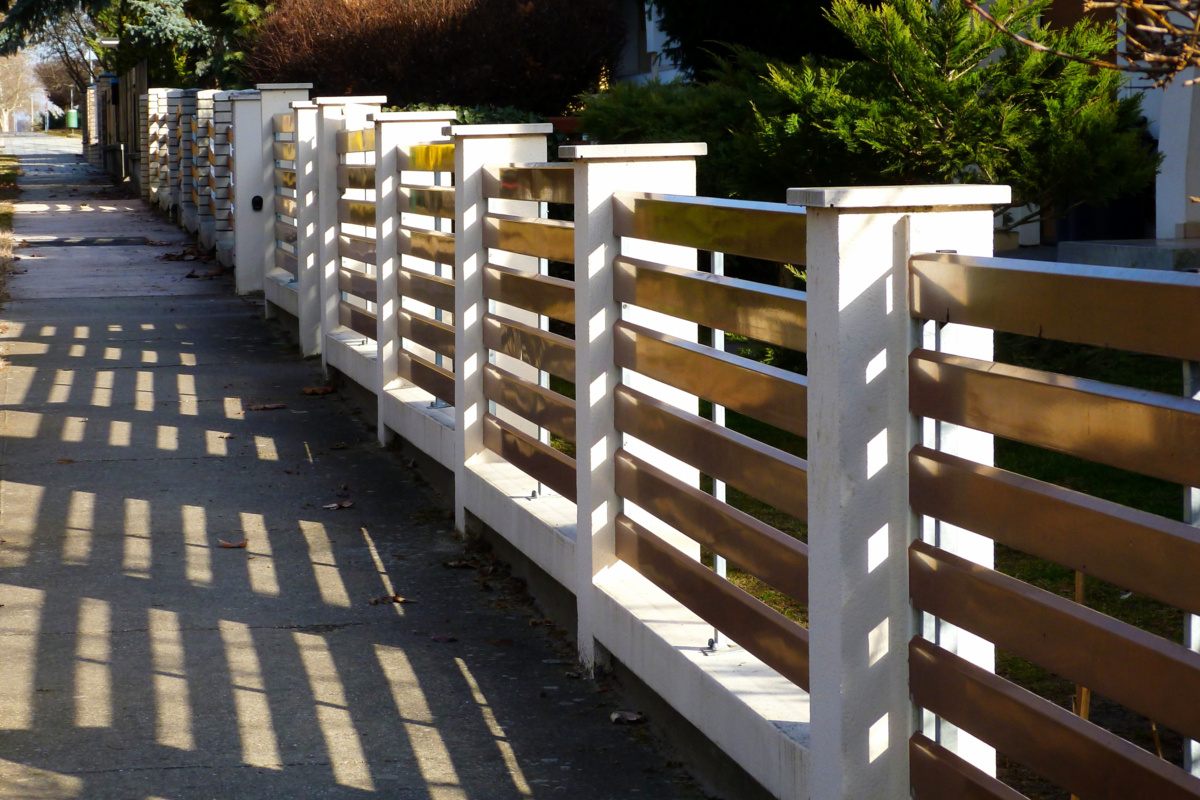
A modern horizontal fence creates long visual lines that can make a compact yard feel wider. Homeowners can also use narrow boards, mixed board widths, framed panels, decorative gaps, or contrasting posts to create a customized design. However, clean lines require careful installation, as small changes in elevation, spacing, or board alignment can become noticeable over a long run.
Vertical Fence Pros and Cons
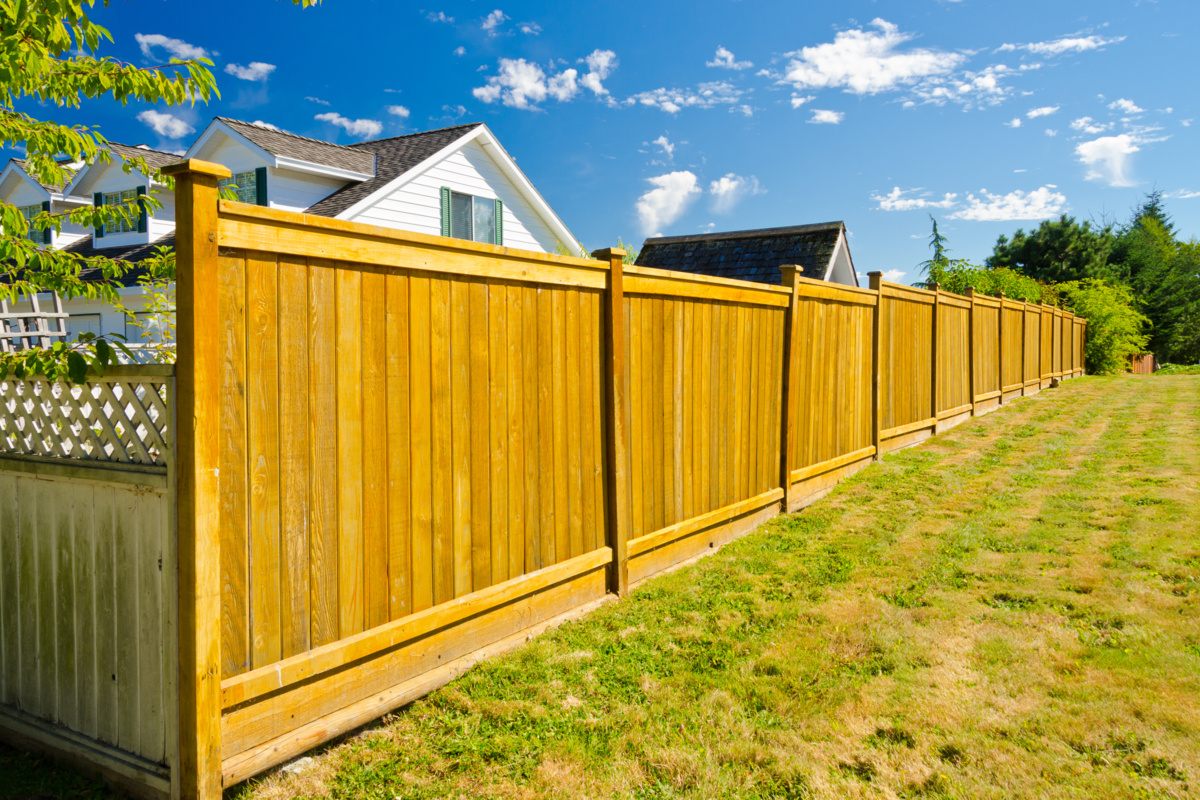
Traditional vertical fencing works with many architectural styles and can be customized through board profiles, spacing, trim, caps, and decorative top treatments. It is also practical for many wood privacy fence projects because individual boards can often be adjusted or replaced without rebuilding an entire section, and tight vertical spacing is part of what makes wood fencing work well for households with pets. The trade-off is that the design may feel more conventional unless the material, stain, trim, and top details are carefully selected.
What Affects the Cost of a Horizontal or Vertical Fence?
Horizontal fencing often costs more than a comparable vertical design because it may require additional framing, straighter boards, tighter alignment, and more labor. The final price still depends on the full project scope rather than board orientation alone.
Common cost factors include:
- Total fence length and height
- Wood species and board grade
- Post spacing and framing requirements
- Number and size of gates
- Existing fence removal
- Yard access and elevation changes
- Soil and drainage conditions
- Staining or finishing
A simple vertical fence on a level yard may cost less than a custom horizontal installation, but a steep grade, difficult access, or challenging soil can increase the cost of either design.
Which Fence Layout Works Better on Slopes and Uneven Ground?
Vertical boards generally provide more flexible fencing options for slope or uneven yards. Horizontal fencing can still work on hills, but it usually needs deliberate panel breaks, stepped sections, or custom framing to prevent awkward gaps and uneven lines.
Stepped Vertical Sections
A stepped fence uses level sections that move up or down the slope like stairs. This approach creates an orderly top line and can work well when the grade changes at predictable intervals, although triangular spaces may appear below some sections.
Contoured or Racked Layouts
A contoured fence follows the ground more closely instead of keeping every section perfectly level. Vertical boards can be adjusted to maintain a more consistent distance above the soil, but the material and fence system must be able to accommodate the slope.
Horizontal Fence Ideas for Hills
Horizontal designs usually look best when elevation changes are treated as intentional design features. Framed panels, terraced runs, shorter sections, retaining-wall coordination, or planned elevation breaks can help maintain cleaner lines across a hill.
Gate swing, mowing access, drainage, pets, and privacy gaps should be reviewed before the final slope layout is selected. A layout that looks attractive from one angle may create practical problems elsewhere in the yard.
How Can Frost Heave and Clay Soil Affect a Minnesota Fence?
Minnesota’s cold climate makes post installation an important part of fence planning. The state’s official frost-depth map identifies building-code frost protection depths of 42 inches in southern counties and 60 inches in northern counties. Those figures apply to regulated building foundations and should not be treated as a universal fence-post rule, so local requirements and site conditions still need to be checked.
Frost heave can occur when freezing temperatures and available soil moisture contribute to ice formation below ground. Upward pressure may gradually shift inadequately installed posts, leading to uneven fence lines, leaning sections, or gates that bind. A fence in clay soil may require added planning because clay can retain moisture and change volume, but proper post depth, hole design, drainage, spacing, and material selection can help reduce movement.
How Should You Choose Between a Modern Horizontal Fence and a Traditional Vertical Fence?
The best choice comes from matching the design to the property’s grade, budget, maintenance needs, and architectural style, the same way you would match any residential fence style to the home it surrounds. Use these three guidelines to narrow the decision:
- Choose horizontal fencing when a modern appearance is the main priority, the grade allows clean panel transitions, and the budget can support more detailed framing and alignment.
- Choose vertical fencing when easier slope adaptation, simpler repairs, traditional styling, or cost control matters more.
- Consider a hybrid layout when horizontal panels suit a patio or prominent outdoor area, but vertical sections make more sense along steeper or less visible property lines.
Our project gallery shows how different layouts and materials look on real properties, easier to judge than a single inspiration photo.
What Should an Installer Evaluate Before Finalizing the Design?
Before installation begins, we review property boundaries, permits, utilities, elevation changes, soil, drainage, wind exposure, and any local requirements that affect placement or post-setting.
Daily use matters just as much as site conditions. Gate locations, privacy goals, pets, mowing access, maintenance expectations, fence height, and material choice should all be considered before the final layout is approved. This is also where a local crew tends to outperform a DIY build, since post depth, frost conditions, and permit rules vary by site. We provide professional fence installation in Minneapolis and the surrounding Twin Cities.
Could a Different Board Direction Improve the Way Your Yard Works? Ask Next Day Fences
The right fence should complement your home without ignoring the slope, soil, drainage, or seasonal movement beneath it. An on-site evaluation can show where a horizontal layout will create clean lines and where vertical or hybrid sections may produce a more practical result. Contact Next Day Fences to compare materials, board orientation, gate placement, and post-setting needs for your Minnesota property. Request an instant quote to start planning a fence that fits both the yard and the way you use it.