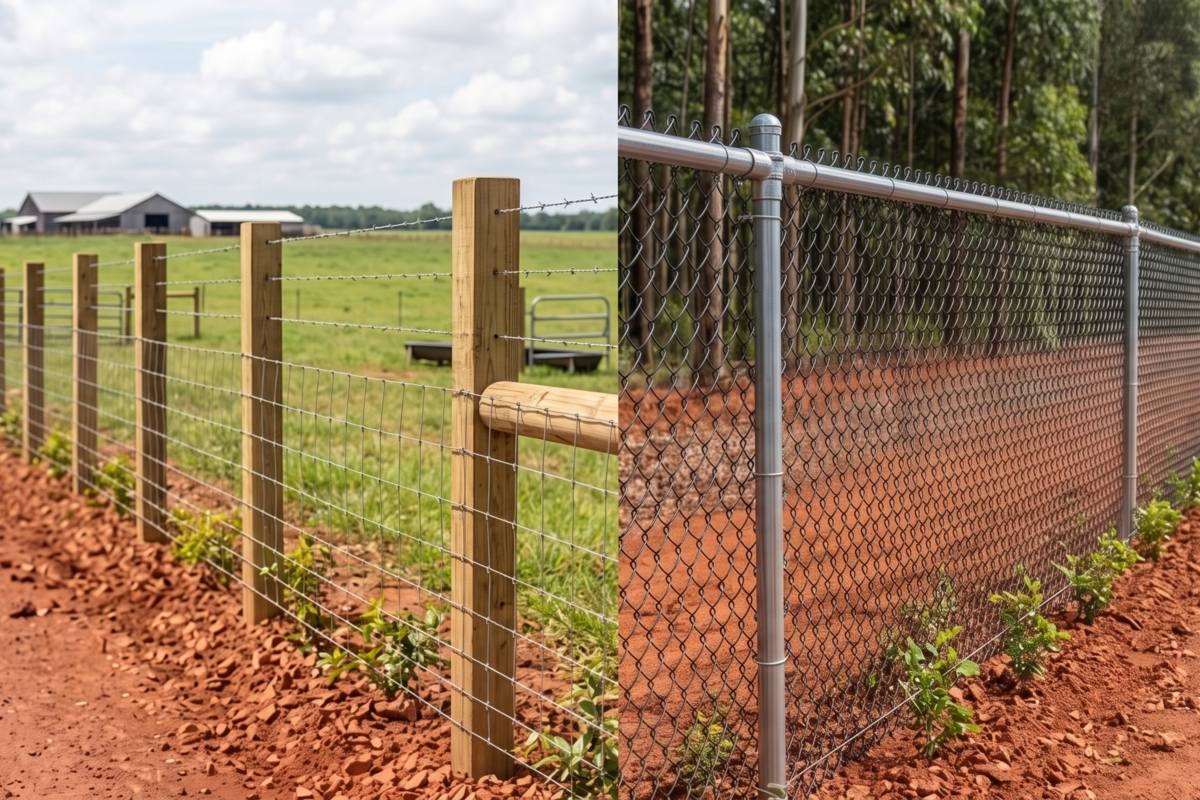
When comparing wood vs. steel fence posts, galvanized steel usually provides more predictable long-term structural performance in Minnesota. Steel does not rot, shrink, or warp like wood, although coating condition, installation depth, soil, and drainage still affect how any post system performs.
During our on-site assessment, we review the property layout, fence style, soil conditions, gate locations, and expected use. We can then recommend a post system that supports the homeowner’s appearance, maintenance, and budget priorities.
Comparing Wood vs. Steel Fence Posts
Fence boards and rails control much of a fence’s appearance, but the posts support the full system. Posts carry wind pressure, hold gates in alignment, and resist movement as Minnesota soil freezes and thaws. The main differences include:
- Wood can decay, split, twist, or warp as it ages.
- Galvanized steel does not absorb moisture or rot.
- Damaged protective coatings may leave steel vulnerable to corrosion.
- Wood posts are easier to blend into a traditional wood fence without covers.
- Hidden steel post systems preserve a wood appearance while adding a steel support structure.
- Warranty coverage varies by product and installer.
- Installation depth and soil support affect both materials.
Material alone does not determine fence durability. A good post set too shallow, or set without accounting for soil and drainage, will still shift, lean, and put stress on everything attached to it. That holds across systems, including chain-link fences.
How Each Post Handles Minnesota Conditions
Wood and steel respond differently to moisture, soil movement, and repeated seasonal exposure. Material is only part of it, since what actually lifts a post is usually how it was set rather than what it was made of. Still, the differences below explain a lot about how two similar-looking fences age.
Moisture, Rot, and Corrosion
Wood posts stay popular for good reasons. They are familiar, easy to source, and cheaper per post. A new wood post is also genuinely strong, which surprises people. It just does not stay that way. The ground line is where it goes, because that is where moisture sits and never fully dries, and the post checks and warps as it cycles wet to dry.
Galvanized steel does not absorb groundwater, feed wood-destroying organisms, or rot. Its protective coating helps resist corrosion, although cut edges, damaged coating, road salt, and other aggressive exposure conditions still need consideration.
Freeze-Thaw Movement
Post material alone cannot prevent frost-related movement. Installation depth, soil support, drainage, fence height, and exposure determine how well the full system stays aligned as Minnesota soil freezes and thaws.
For our cedar fence installations, we drive PostMaster steel posts four to five feet deep. That is our installation standard for these systems, not a statewide legal depth for every Minnesota fence.
Structural Stability and Warranty
Steel avoids the shrinking and warping that can weaken connections between wood posts and rails. This added dimensional stability can be especially useful around gates and taller privacy sections.
Master Halco’s PostMaster+ specifications rate the G90 galvanized line post at 73 mph ultimate wind load with a limited lifetime warranty, and the gate post at 112.6 mph. That gap is the whole argument. Gates take more abuse than any other part of a fence, and it is where the difference actually shows up. Both ratings apply to those specific products, not to every steel post or finished fence.
Can Steel Posts Work With a Cedar Fence?
Steel posts do not require a homeowner to give up the appearance of cedar. PostMaster systems are designed to accept standard wood rails, and the steel profile can be covered so it is not visible from either side of the finished fence. This approach combines cedar boards and rails with a steel structural post. Our cedar fencing with hidden steel posts uses PostMaster posts wrapped in cedar, so the fence keeps a traditional wood appearance with no wood post sitting at the ground line.
A hidden steel post and an ornamental steel fence are different systems. Ornamental steel uses exposed decorative panels and steel supports as part of the finished design. Homeowners who want an open perimeter rather than a wood privacy fence may prefer ornamental steel fence installation.
Choosing the Right Post System
A traditional wood post may still fit a project with a limited budget, favorable drainage, modest fence height, and a homeowner who accepts future maintenance. Steel becomes more attractive when the priorities include ground-line rot resistance, gate stability, a longer structural warranty, or reduced concern about post-warping.
Local approval requirements also belong in the decision. Whether steel fence installation requires a permit in Minnesota depends on the municipality and project details. Property lines, utilities, height rules, and gate placement should be confirmed before work begins. So the useful comparison is not wood against metal. It is the two proposals in front of you: which post product, set how deep, with what coating, and what warranty behind it.
Cost and Long-Term Value
Wood commonly has a lower initial post-material cost. The full project difference depends on post type, length, coating, hardware, installation method, labor, gate requirements, and site access. These same variables influence steel fence replacement and installation costs, so a fixed percentage premium will not fit every property.
Long-term value is not really about predicting a service life. It is about how long you plan to stay in the house, how wet that part of the yard gets, what the warranty actually covers, and whether you want to be resetting posts fifteen years from now.
Build Your Fence on the Right Foundation
Steel generally offers a stronger long-term case for Minnesota homeowners who want to reduce ground-line rot and post movement without losing the appearance of cedar. Wood can still serve certain projects well, but its moisture exposure and changing shape create maintenance considerations that steel avoids.
We can review your fence style, site conditions, gates, and budget during a free on-site assessment. To compare the available post systems for your property, contact Next Day Fences and get clear recommendations about wood vs. steel fence posts.