

Cedar Fence Installation in St. Paul, MN
Roughly four in ten St. Paul houses predate 1940, and a cedar fence that suits one takes more thought than a catalog pick.
- Locally owned & family operated
- Fast 1–2 day installation on most residential projects
- Lifetime warranty on installed posts
- Locally owned & family operated
- Fast 1–2 day installation on most residential projects
- Lifetime warranty on installed posts


The Right Base Keeps a St. Paul Cedar Post Dry
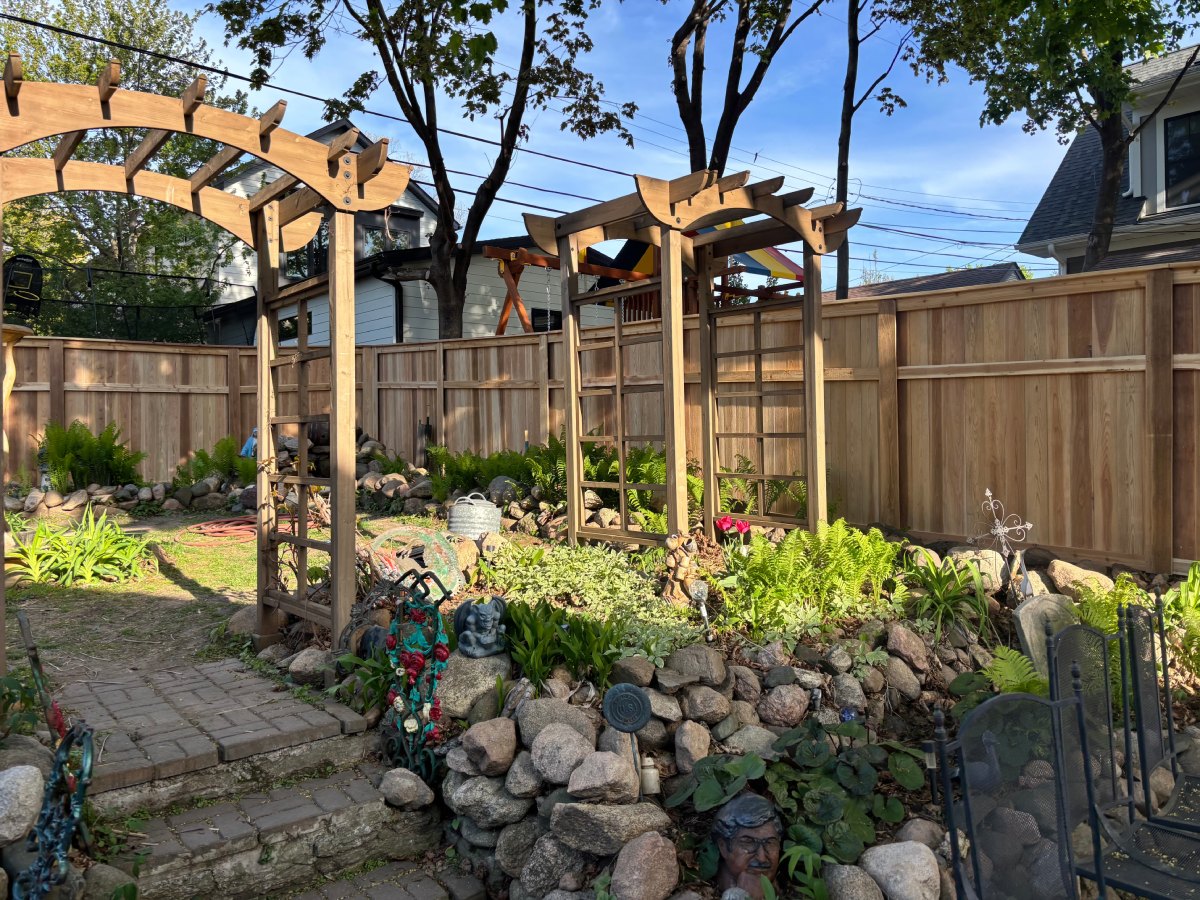
Most people assume more concrete means a stronger fence. With cedar, it often means the opposite. Encase a wood post completely, and you’ve built it a bathtub: rain works in at the top, finds nowhere to drain, and sits against the grain all season. The fence above can be flawless while the post quietly goes at the collar.
We set posts to drain instead. That means a compacted gravel base under the post so water keeps moving down and away, and where concrete is called for, a collar crowned and sloped so it sheds rather than holds. Combined with the 42 inches Ramsey County’s frost zone requires, it’s the difference between a fence you adjust every spring and one you forget about.

Satisfied Customers
★★★★★
These guys do phenomenal work. We have a huge backyard and we we’re expecting them to take a few days, they ended up getting it all done in a day and it looked absolutely stunning! One small issue was when the inspector came out after, it was just barely over the property line on one side. Dave and his team came out and took down and reinstalled to make sure we were within our property line right away. Fantastic communication, quick service and exceptional work. I would recommend Next Day Fence to anyone and everyone.
★★★★★
We had new Fences installed here in our Doggie Daycare interior play room, and the team was fast, professional and the product delivered was second to none. Great job guys!! I highly recommend this company if you have any fencing needs large or small. You can trust Next Day Fences will not disappoint! I’d use them again in a heartbeat. ~ Thank you!
Our Cedar Fencing Options in St. Paul
St. Paul is more generous on height than most of its neighbors, allowing seven feet in side and rear yards against four out front. Corners are where it tightens up, with a two-foot ceiling inside the ten feet nearest an intersection, lifted only for fencing that is better than 80 percent open. Cedar clears that bar comfortably.
Board-on-Board
Overlapping boards with the rails hidden, private from both sides and forgiving of the movement that comes with a hard winter. On the narrow lots common across Macalester-Groveland and Como Park, it buys real separation without feeling like a wall.
Solid Privacy
Boards butted tight to the full seven feet the city allows, which is a foot more than most suburbs permit. The most screening you can get here without crossing into inspection territory.
Spaced Picket
The style with the longest history in this city, and the one that clears the 80 percent openness test at a corner where a solid panel would need a variance. It’s also what most heritage districts expect to see out front.
Shadowbox
Boards alternating either side of the rail, so your neighbor sees the same fence you do. Useful along a shared line in an older neighborhood where the two houses sit close enough that both sides are on display.
Every one of them is installed by our cedar fence installation crews, with posts dug below the Ramsey County frost line.
In a Heritage District, the Design Gets Reviewed Before the Fence Does
St. Paul maintains heritage preservation districts in Ramsey Hill, Summit Hill, Irvine Park, Woodland Park, Dayton’s Bluff, Lowertown and Historic Hill. If your house sits in one, Heritage Preservation Commission staff review the fence design, and that approval has to land before the city signs off on the fence plan review.
Cedar is usually the answer rather than the obstacle. It takes period profiles the way nothing else does, so a picket can be milled to a dog-ear, gothic or spear point that matches what the street already has, and the rail and post proportions can follow suit. Vinyl cannot do that and steel only approximates it. We file both applications together and bring design choices that a reviewer recognizes, which tends to move things along considerably faster than a stock panel does.
Cedar Care and Fence Replacement in St. Paul
In a city where the median house dates to 1952, a good share of our work here is replacing something rather than starting fresh.
Replacing Panels, Posts, and Whole Runs
Cedar usually gives out a section at a time, which means a partial rebuild often makes far more sense than a full teardown. The catch in St. Paul is that every fence needs a permit, replacements included, and an old run may no longer sit where the ordinance allows. We measure the existing line against current heights and the corner triangle before quoting any fence repair.
Keeping the Color You Picked
Bare cedar drifts from honey through silver to gray, and plenty of people like it there. What actually causes harm is water sitting in open grain through a freeze. Cedar fence staining closes it up. New cedar wants a season to dry first, then a coat every few years, which matters twice over in a heritage district where color can form part of what was approved.
St. Paul Permits Every Fence, Replacements Included
There’s no height below which you can skip the paperwork here, which makes St. Paul stricter than almost any suburb around it. What the city’s fence requirements ask of a cedar job:
- A permit for every fence. New or replacement, any material, any height. Applications go through PAULIE.
- Plan review before you build. An examiner checks height and placement, and work starts once it’s approved.
- $45 covers your first 200 lineal feet. Every additional 100 adds $15.
- Four feet out front, seven to the side and rear. The taller allowance is unusually generous for this area.
- Two feet near a corner. That applies inside ten feet of an intersection, unless your fence is better than 80 percent open.
- Entirely inside your line. Not on it, not over it, and not on the boulevard. The city won’t locate markers or settle boundary disputes.
- Inspections only in three cases. Over seven feet, around a pool, or barbed wire. A standard cedar fence needs none.
- Heritage districts add a step. HPC design review comes before the city’s fence plan review.
- Variances cost $85 and are usually decided within a business day or two.
We prepare the application and site plan, file through PAULIE, handle HPC review where it applies, and book locates through Gopher State One Call.
Not Set on Cedar? Here's What Else We Build
Cedar fits this city better than most, though it isn’t everything we do. Still thinking it over? Here’s the rest of what our St. Paul fence contractors install.
Chain Link Fencing
Inexpensive, durable, and open enough to clear the 80 percent rule at a corner without a second thought. It asks nothing of you afterward, which is its whole appeal.
Ornamental Steel Fence
Four feet of powder-coated steel is exactly what the front yard allows, and the finish handles road salt for years. Its open pickets also pass the corner test where solid panels fail.
Vinyl Fencing (4 ft and 6 ft)
Keeps its shade year after year with no brush required. Worth knowing that heritage district reviewers tend to be cooler on vinyl than on wood, so it suits the parts of the city outside those boundaries best.
Fence Replacement & Repair
Old city, old fences. We assess what’s still sound, rebuild what can be saved, and replace the runs that have genuinely finished.
Our Process
The same four stages every time, whichever material you pick, through our fence installation service.
1. Initial Consultation
You contact us and share your needs, priorities, and property goals. We provide clear recommendations and practical fence solutions based on your layout, budget, and use.
2. On-Site Assessment
We schedule a free on-site visit to take measurements, identify obstacles, review your yard conditions, and explain the installation method so you know exactly what you’re getting.
3. Proposal & Approval
You receive a clear, detailed proposal with no confusion or hidden details. Once approved, we move straight into scheduling.
4. Permit, Inspection, and Build
We handle permits, utility marking, and any required inspections, then build to the approved layout.
Why St. Paul Homeowners Choose Next Day Fences
Older neighborhoods bring tight lots, alley lines, mature boulevard trees and a review board, and none of that is obvious from a price per foot. We’ve been fencing cities and neighborhoods across the metro since 2021, and cedar accounts for most of it.
Here’s what that looks like on your job:
- Posts set to drain, on gravel or a crowned collar
- Depth to the 42 inches Ramsey County requires
- PAULIE application and site plan prepared for you
- HPC design review handled where your district needs it
- Picket profiles chosen to suit the house, not the catalog
- Corner triangle checked against the 80 percent rule
- Locates confirmed with Gopher State One Call first
- Your liability cover set out in the contract
- Lifetime warranty on installed posts
- 5 to 10 year craftsmanship warranty
You’ll never see most of that work, but you’ll see a fence that still looks right on a street where everything else is a hundred years old.
Speak with Cedar Fence Installation Contractors in St. Paul, MN
An old house deserves a fence that looks like it belongs there, and getting that right is more interesting than filling in a form.
Come to us with whatever you have in mind, even if it’s only a rough idea. We’ll walk the property, talk through profiles and heights that suit the house, sort out the permit and any heritage review, and come back to you with a real number. No decisions needed on the doorstep. Our St. Paul cedar fence installers are ready whenever you are.
St. Paul Cedar Fencing FAQs
1. Does a cedar fence need a permit in St. Paul?
Yes, and so does replacing one. There's no height or material exemption here. Applications run through PAULIE, with a fee starting at $45 for 200 lineal feet and rising $15 per extra 100. We handle the submission.
2. How tall can I build?
Seven feet in side and rear yards, which is a foot more than most nearby suburbs allow, and four feet in the front. Go above seven, and you trigger an inspection, which a standard cedar fence otherwise avoids entirely.
3. My house is in a heritage district. What changes?
The design goes to Heritage Preservation Commission staff for review, and their approval has to come through before the city approves the fence plan review. We file both at once and bring profiles suited to the district, which usually keeps things moving.
4. What are the rules on a corner?
Two feet is the ceiling inside ten feet of an intersection. The exception is fencing better than 80 percent open, which a spaced cedar picket generally is, while a solid privacy panel would need a variance.
5. Why does post setting matter so much here?
Because a post sealed in concrete can't drain, and water trapped against cedar will rot it at the collar while the boards above look perfect. We set on gravel or a crowned collar so the water leaves and goes down to the 42 inches the frost line requires.