General Fence Contractor in St. Louis Park, MN
A general fence contractor for St. Louis Park, MN, building in cedar, vinyl, chain link, and ornamental steel, and handling the permit every fence here requires.
- Locally owned & family operated
- Fast 1–2 day installation on most residential projects
- Lifetime warranty on installed posts
- Locally owned & family operated
- Fast 1–2 day installation on most residential projects
- Lifetime warranty on installed posts


Our Full-Service Fence Solutions in St. Louis Park
Every fence in St. Louis Park needs a permit. Not just tall ones and not just new ones: a new fence, a new gate, or a replacement panel or post all require one before work begins, and the 2026 application fee is $55. We file it, schedule the inspection, and build to the height your particular yard allows.

Satisfied Customers
These guys do phenomenal work. We have a huge backyard and we we’re expecting them to take a few days, they ended up getting it all done in a day and it looked absolutely stunning! One small issue was when the inspector came out after, it was just barely over the property line on one side. Dave and his team came out and took down and reinstalled to make sure we were within our property line right away. Fantastic communication, quick service and exceptional work. I would recommend Next Day Fence to anyone and everyone.
We had new Fences installed here in our Doggie Daycare interior play room, and the team was fast, professional and the product delivered was second to none. Great job guys!! I highly recommend this company if you have any fencing needs large or small. You can trust Next Day Fences will not disappoint! I’d use them again in a heartbeat. ~ Thank you!
Chain Link Fencing
Chain link holds a boundary without blocking light, which counts for something on the compact lots around Texa-Tonka and Bronx Park. It also solves the corner problem, since nothing inside a visibility triangle may stand taller than 30 inches and open mesh keeps the rest of the yard usable.
Decorative 4-Foot Ornamental Steel Fence
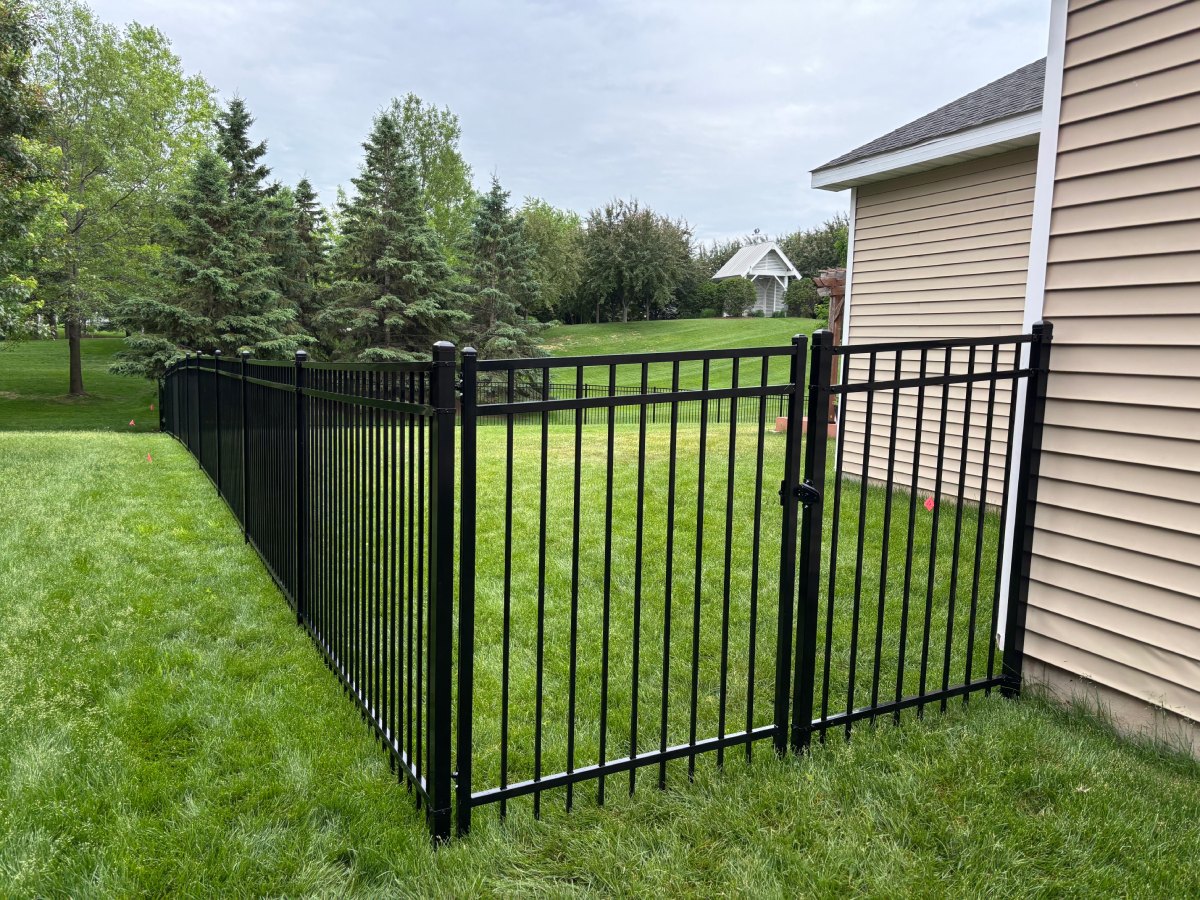
Four feet is precisely what St. Louis Park permits in a front yard, and ornamental steel is manufactured to that height. Powder coating resists rust and road salt, and a symmetrical picket pattern reads as finished from both sides, so the structural face points inward wherever the run is set.
Vinyl Fencing (4 ft and 6 ft)
Side and rear yards cap out at six feet, which is exactly where a standard vinyl privacy panel sits. Go higher, and the process changes entirely: the city wants an engineer’s approval for building code compliance plus a building permit in place of the fence permit. Vinyl also holds its color through hard winters.
Cedar Fencing
Cedar belongs on the Cape Cods and postwar ramblers that fill Fern Hill, Browndale, and Minikahda Vista. Our cedar fence installation crews set posts below frost depth and orient every run so the finished face looks outward, which is one of the things the inspector confirms.
A fence is only ever as straight as its posts. The state building code puts Hennepin County at a 42-inch minimum footing depth, and we dig to it, which is why our gates still latch after a few winters have worked on the ground.
The Inspection That Happens Before Your Posts Go In
Most cities look at a fence once it is finished, if they look at all. St. Louis Park looks at it mid-build. After the post holes are dug and before a single post is set, an inspector comes out to confirm the fence sits where the permit says it does.
Preparing for that visit is real work. The property corner irons have to be located, dug out, exposed, and staked, with a string pulled tight between them to represent the line. Someone responsible for the construction has to be there. We handle all of it, because a crew that arrives planning to dig and set in one pass loses a day, and a homeowner who cannot find their irons loses considerably more.
What the City Checks Before It Signs Off
St. Louis Park publishes its requirements in a homeowner handout backed by the zoning code. These are the provisions that decide your layout:
- A permit for nearly everything. New fences, new gates, and replacing an existing fence, panel, or post. Only damaged boards are exempt. The 2026 fee is $55.
- A survey or site plan. Showing existing conditions and where the fence will go.
- Inside your line, never on it. The fence sits on your property, not on the line or over it.
- Forty-eight inches in front. Front yard fences stop at four feet.
- Six feet to the side and rear. Both yards allow six feet.
- Past six feet, the rules change. A taller fence needs an engineer’s approval for state building code compliance and a building permit rather than a fence permit.
- Thirty inches at the corner. Nothing taller stands inside a corner lot’s visibility triangle.
- Corner lots need a phone call. Which side counts as the front yard takes care to work out, and planning settles it at 952.924.2575.
- The structural side faces you. Posts and rails point at your house, finished side out.
- Some materials are out. Above ground electric fencing is prohibited.
We confirm the current requirements with Community Development, prepare the application and site plan, and file locates through Gopher State One Call before anyone breaks ground.
Our Process
Elsewhere, digging holes and setting posts happen in one afternoon. Here they cannot, because the inspector stands between them. The fence installation process we follow is built around that interruption rather than caught out by it.
1. Initial Consultation
We cover what the fence is for, what you want to spend, and what your yard type allows. Corner lots get extra attention here, since the front yard determination and the visibility triangle both change what is buildable.
2. On-Site Assessment
We measure, locate your corner irons, and mark the proposed line. Finding the irons early matters more in St. Louis Park than almost anywhere, because the inspection will require them exposed and strung later.
3. Planning and Proposal
You get a drawn site plan and a written proposal covering materials, dimensions, the build method, full pricing, and what the warranty covers on posts and on workmanship.
4. Permit, Inspection, and Build
We submit the application, dig the post holes, prepare the irons and string, and meet the inspector on site. Posts go in once the city clears the layout.
Why St. Louis Park Homeowners Choose Next Day Fences
A contractor who has never worked here will quote this job as a one-day install and discover the inspection halfway through. We have been building fences in cities and suburbs across the metro since 2021, and we schedule St. Louis Park projects around the city’s sequence rather than against it.
Homeowners choose us because we deliver:
- Fence permit prepared and filed with your site plan
- Corner irons located, exposed, and strung
- The inspection scheduled and attended
- Visibility triangle and front yard confirmed on corner lots
- Gopher State One Call locates filed before digging
- Liability protection stated in writing
- Lifetime warranty on installed posts
- 5 to 10 year craftsmanship warranty
- Posts set to the 42-inch frost depth Hennepin County requires
- Most residential installations done in one to two days
The city built a checkpoint into the middle of your project. We build our schedule around it.
Speak with a General Fence Contractor in St. Louis Park, MN
Permits, visibility triangles, and exposed property irons are not what anyone has in mind when they decide the yard needs a fence. Leave that part to us.
Describe the yard you want and we will come look at it, find your corners, and let you know what St. Louis Park will approve before anything costs you money. Whatever you land on, from chain link to cedar fence installation in St. Louis Park, corner lot complications and the four-foot front yard limit come up in that first conversation, not after the design is set. A clear price and a firm date follow.
St. Louis Park Fencing FAQs
1. Does St. Louis Park require a fence permit?
Almost always. A permit must be issued before you build a new fence or gate, or replace an existing fence, panel, or post. Only the replacement of damaged boards is exempt. The 2026 application fee is $55.
2. What is the tallest fence allowed?
Forty-eight inches in the front yard and six feet in side and rear yards. Going above six feet requires an engineer's approval for state building code compliance and a building permit instead of the standard fence permit.
3. Why does the city inspect before the posts are set, and what do I need ready?
The inspection happens after the holes are dug and before any post goes in, because that is the last moment a misplaced fence is still cheap to fix. You need your corner irons located, exposed, and staked, a string pulled tight between them, and someone responsible for the build on site. We handle all of it.
4. I have a corner lot. What changes?
Two things. No fence inside the visibility triangle may exceed 30 inches, and determining which side counts as your front yard takes a conversation with the planning department. We sort out both before finalizing a design.
5. How soon can you start?
Most residential yards take one to two days of build time once the permit is issued and locates come back, with the inspection falling between the digging and the setting. Commercial work runs longer and depends on linear footage, site access, and material lead times.